What Is a Light-Up Wristband? Types and How LED Differs
Chemical glow, single-colour LED, remote-controlled RGB — three types of light-up wristband and where each fits.
What does “light-up wristband” mean?
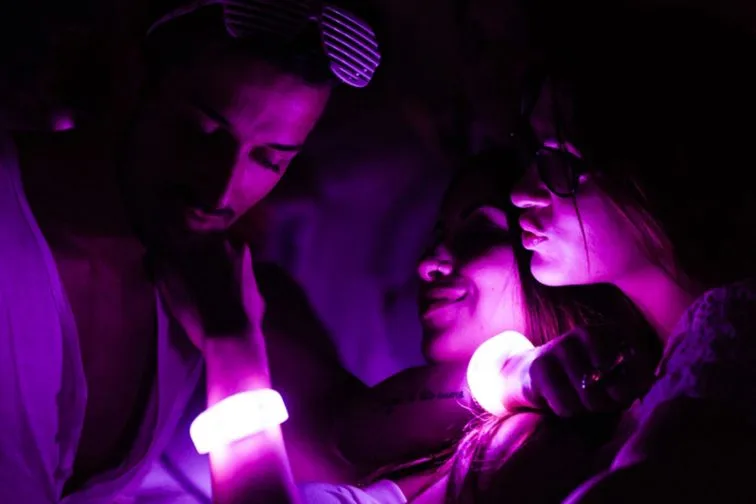
Light-up wristband is an umbrella term for any band that emits light in the dark. The same product also circulates as LED bracelet, glow wristband, remote-controlled wristband and neon band; when you request a quote it pays to confirm which one the other side means.
Three very different products sit under that term. Their price, lifespan and the job they do at an event are not the same. We separate them below so you can build your quantity and budget plan on the right one.
1. Chemical (glow stick) wristband
Single-use bands that glow through a chemical reaction once the glass ampoule inside is snapped. No battery, no electronics, no control. They light the moment they are broken, fade within 4-8 hours and cannot be used again.
They are the cheapest option per unit, but the colour cannot be chosen, they cannot be switched off, they never run in sync and all of them become waste at the end of the night. Fine for a children’s party, a small neighbourhood event or a low-budget job where something just needs to glow. Not enough where the crowd is meant to be part of a stage show.
2. Single-colour, self-powered LED wristband
Coin-cell LED bands with a small switch on the housing. They usually light in one colour or blink on their own fixed cycle. They last longer than chemical bands and can be reused by swapping the battery.
What is missing is control: because each band runs independently, no order can be established across the venue. In a room of a hundred people, a hundred bands blink out of step — that is scattered glitter, not a light show. It makes sense for promotional giveaways and merchandise.
3. Remote-controlled (wireless) LED wristband
Bands holding an RGB LED, a battery and a wireless receiver. The attendee does nothing but put the band on; colour, brightness, effect and timing are driven by the operator from a central transmitter. Latency between command and light is in the millisecond range, so thousands of bands appear to fire at once.
With this type the venue can be split into zones with a colour per zone, and the system can be patched into the lighting console over DMX and written into the show’s timecode. This is the type used at concerts, festivals, weddings, corporate launches and stadium events — and the category our product sits in.
Cost per unit is higher than the other two, but because the bands are collected afterwards and reused, that cost spreads across several events.
Which one should you pick?
If the event has a stage, a DJ or a show flow, and the crowd is meant to be part of it, remote-controlled LED wristbands are the only viable option. The other two types cannot tie a crowd to the rhythm on stage.
If the goal is simply handing out an accessory that glows in the dark, on the tightest possible per-unit budget, chemical bands are enough. If it is a branded giveaway attendees take home, single-colour LED bands are the middle ground.
The practical consequence of the ambiguity: the number you get back when you ask the price of a “light-up wristband” swings wildly depending on which type is being discussed. Price all three separately when comparing quotes.
Are light-up and LED wristbands the same thing?
In the events industry they mean the same thing in practice: both are used to refer to remote-controlled RGB LED bands. Technically “light-up wristband” is the broader heading and also covers chemical glow bands.
Across every page on this site, LED wristband and light-up wristband describe the same product — the wirelessly controlled RGB LED band. For technical detail head to the product page; for quantity and budget planning, the pricing page.