Wristband Sync with DMX and Timecode
An integration guide for lighting designers and production crews.
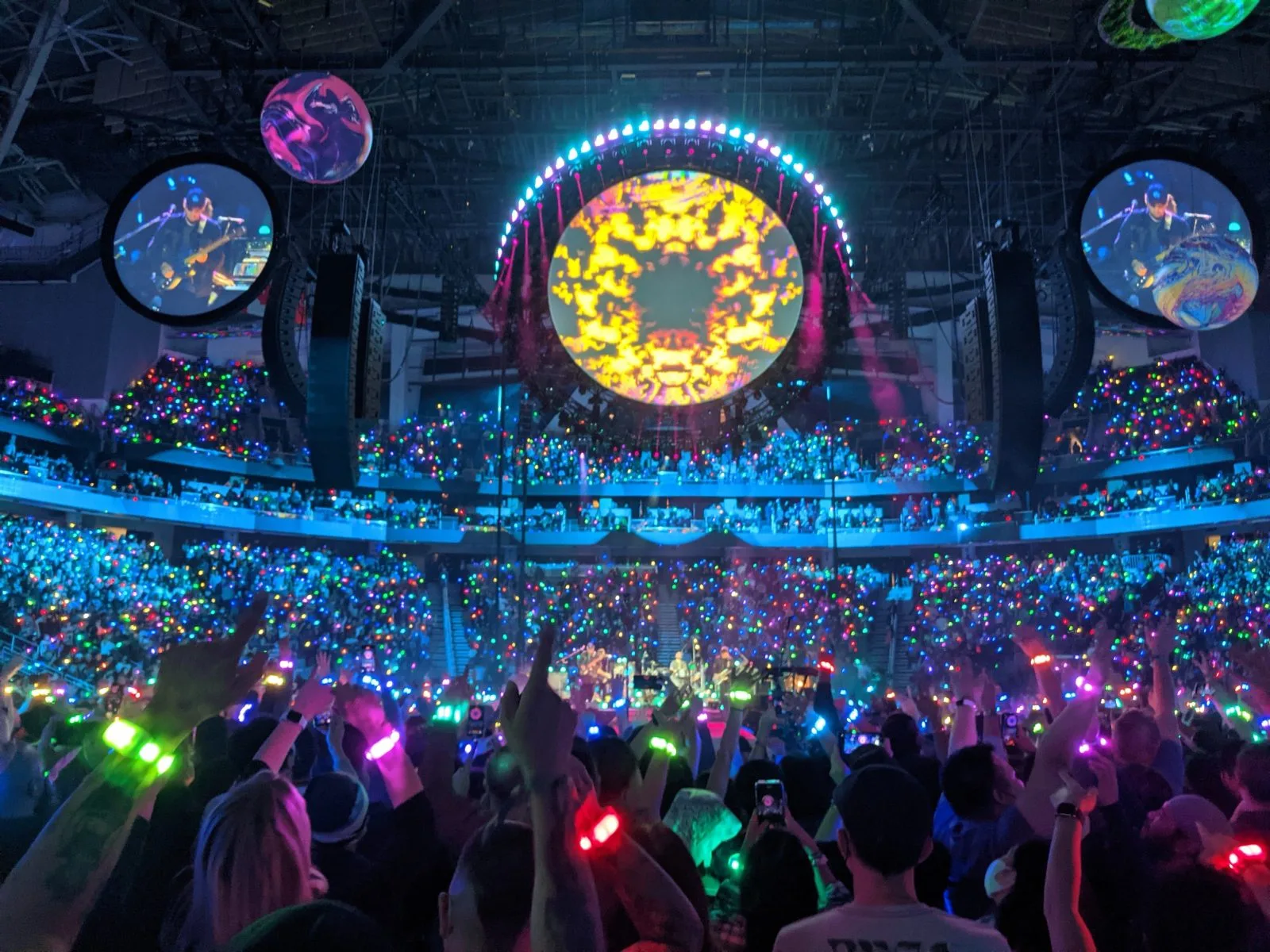
Why patch the wristbands into the console?
Controlling the bands as a separate device, independent of stage lighting, creates two problems: the scenario lives in two places, and timing depends on human reflexes. A DMX connection removes both.
Patched into the console, the wristband becomes a channel in the lighting designer’s cue list. Stage light and wristband fire inside the same cue, at the same moment.
Setup: interface and addressing
The system connects to the console through a DMX interface. Wristband zones are assigned to separate DMX channels so each zone can be driven independently. Colour, brightness and effect mode are controlled on their own channels.
Transmitter positions and a coverage test are done during setup. Shadow areas such as under-stand structures, backstage and enclosed corridors are found in that test, and any extra transmitters are added before rehearsal day.
Writing the scenario to timecode
In timecoded shows, wristband effects are written onto the track’s timeline. A typical build: dark through the intro, a single-colour burst on the first chorus, a wave through the verse, full blackout on the drop, and the whole venue locked to one colour for the closing song.
That scenario is written once the setlist is final. If the running order changes, the cue list is updated — which is why working from the setlist with the production team costs less than reworking it later.
When to use sound-reactive mode
Not every show has timecode. For DJ sets, club nights and events with an improvised flow, sound-reactive mode fits better: the bands follow the music’s energy and lift on the drops by themselves.
Mixed use works too: specific moments (entrance, awards, finale) run on programmed cues while the stretches in between stay in sound-reactive mode.
Rehearsal day checklist
Coverage test: do bands receive commands at the farthest and most obstructed points of the venue?
Zone verification: is each DMX channel driving the right zone?
Cue rehearsal: have the critical moments (opening, chorus, finale) been run at least once with the show?
Fallback: is the backup transmitter on site in case of a failure?